Diaphragm Seal
July 22, 2018Haskel Pump
July 28, 2018
Flow Meter Selection Guide
In simple terms, a flow meter measures the amount of fluid passing through a pipe, but in practice, there are complexities that present multiple options for selection.
The selection of a flow meter depends on the application and the required measurement accuracy.
Factors needed for selecting a flow meter:
Simple applications without the need for flow measurement
If you do not need to measure mass or volumetric flow, a flow meter is not necessary. For example, pumping water in a household does not require a flow meter, though a low-cost flow meter could be useful if needed.
Flow meter selection based on fluid type
Multiple types of flow meters are designed for fluids with different viscosities. For example, water has low viscosity while oil has high viscosity. Therefore, if you need to measure the flow of both fluids, you must use two separate flow meters.
A simple approach for selecting a suitable flow meter is to calculate the Reynolds number of the fluid, which represents the ratio of inertial forces to viscous forces.
Flow meter selection based on the measuring range
Flow meter selection based on measurement accuracy
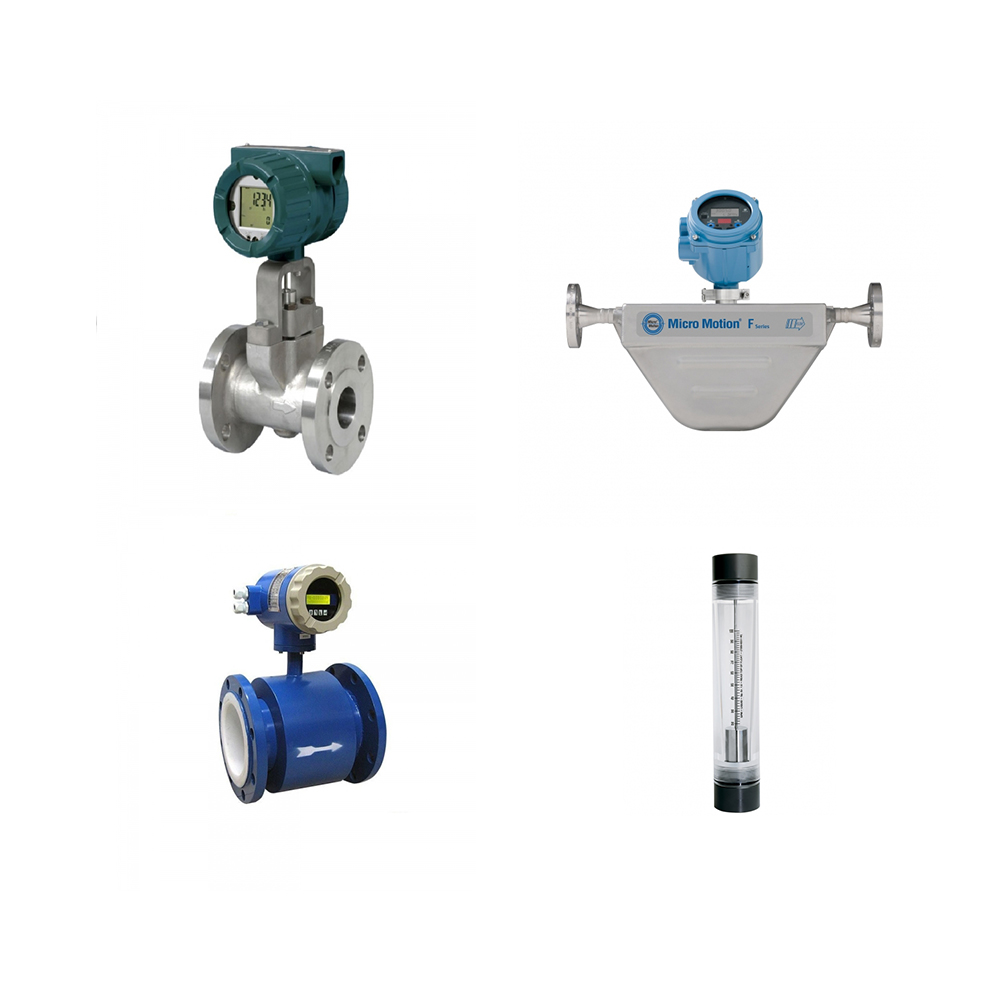
Flow meter selection based on the measurement mechanism
Electromagnetic
Positive displacement
Vortex
Coriolis
Ultrasonic
Diaphragm
Thermal
Variable area
Variable
differential pressure
Turbine
Additionally, to select the appropriate size and material for a flow meter, the buyer should at least have the following information:
Fluid temperature
Fluid pressure
Fluid electrical conductivity
Contaminants in the fluid
Selecting a suitable flow meter is a complex process that requires experience and detailed knowledge of each type of flow meter. With extensive experience in supplying various flow meters, Isatis Process Instruments is ready to provide technical consultation and supply services before purchase.