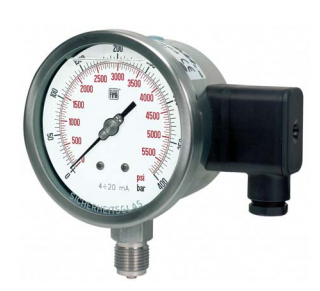
Nuovafim Pressure Transmitter
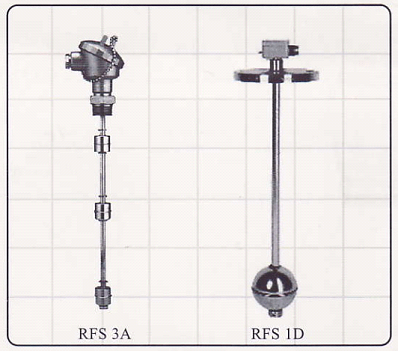
November 12, 2017Float Level Switch
December 3, 2017
Pressure Gauge Mechanism
Bourdon Tube Pressure Gauges: This type of gauge is typically used for measuring non-millibar pressures. Bourdon is the name of the scientist who invented this device. Bourdon tubes are mostly made of bronze, brass, copper alloys, stainless steel, or hard nickel. The physical property utilized in this measurement method is the elastic behavior of materials under pressure. The Bourdon tube consists of a curved, oval-shaped metal tube that tends to straighten as the fluid pressure increases and curves more as the pressure decreases. The changes in curvature are transmitted to the pointer through a gear mechanism. The direction and amount of pointer movement depend on the direction and degree of curvature change of the tube.
Advantages:
-
High accuracy in bar-scale pressures
-
Lower cost
-
Wide range of measurement spans
-
Ability to measure vacuum pressure
-
Capability of having an electrical output when coupled with strain gauges, magnets, capacitors, and other electrical transducers
-
Long service life
Disadvantages:
-
High level of hysteresis
-
High sensitivity and susceptibility to shock and vibration
-
Low accuracy in measuring millibar pressures
Diaphragm Pressure Gauges: Pressure measurement using a diaphragm is one of the methods of measuring pressure in instrumentation. These sensors, which are usually made of metal or certain types of elastic polymers, are constructed as a flat or corrugated plate. Behind the diaphragm, oil is placed to transmit pressure, causing the pointer to move. The standard measurement range of this type of gauge typically starts from 5 to 10 millibars and extends up to 25 bars.
Advantages:
-
Ability to measure millibar pressures
-
Isolation of the mechanism from the process
-
Suitable for measuring differential pressure
Disadvantages:
-
High cost
-
High maintenance cost