
Positioner
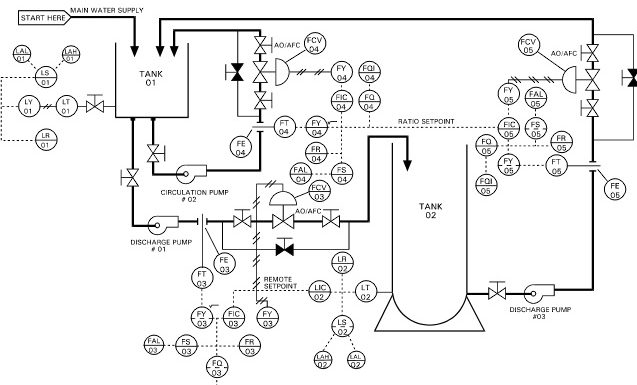
Piping and Instrumentation Diaphragm (P&ID)
August 10, 2020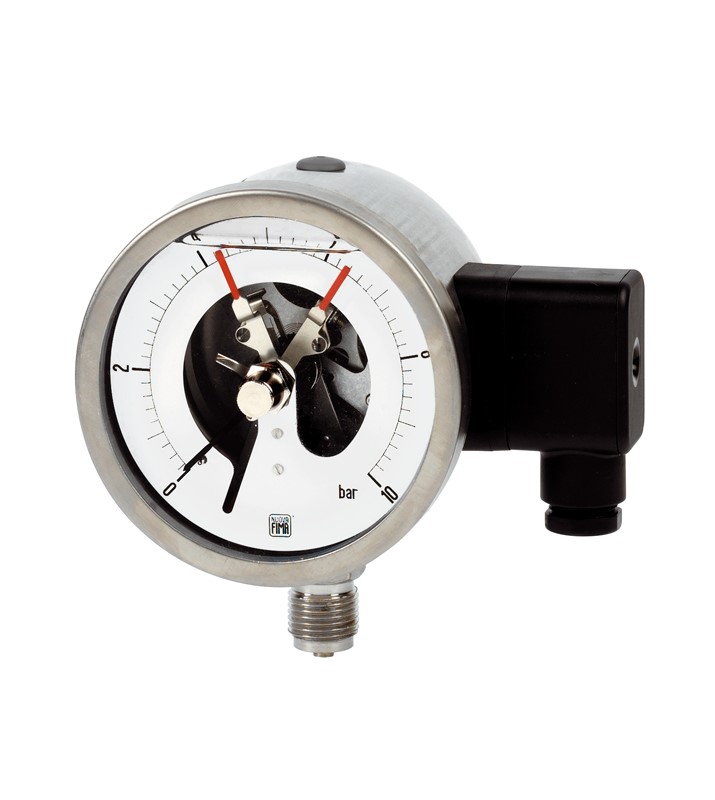
Tank Level Control Using Pressure Switch Gauges
September 7, 2020
Positioner (Positioner)
The control valve must be able to continuously and promptly translate the control signal received from the control room into the valve position within an acceptable response time. For this purpose, a valve and an actuator of appropriate mechanism and size, along with a positioner, are used to meet the user’s requirements.
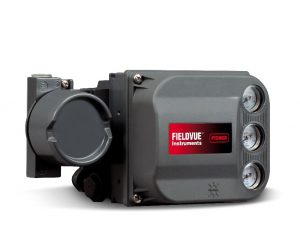
However, there are various other configurations in which, in addition to the above, the positioner must also be considered.
Some of the most important of these configurations include the following:
In cases where the diaphragm requires a pressure higher than the control signal received from the control room.
In cases where the control output signal is electrical (4–20 mA) and needs to be converted to pneumatic pressure.
In situations where the distance between the controller and the valve actuator is very long, causing delays and signal drop in the actuator, while instantaneous response and low response time are also required.
In cases where the controller output needs to be sent to more than one control valve (actuator).
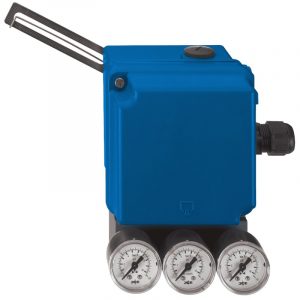

Positioners have two input ports and one output port. One input port is connected to the pneumatic signal received from the control room, which instructs the valve on its desired position. The other input port is connected to the compressed air supply, providing the pneumatic energy required to move the valve stem through the actuator. The third port is the output, connected to the actuator, and its pressure is proportional to the control signal received from the control room. This pressure is amplified according to the force needed to change the valve position, a process known as Bench Set adjustment. If you observe positioners installed on control valves, you will see three gauges corresponding to the three ports on the body.
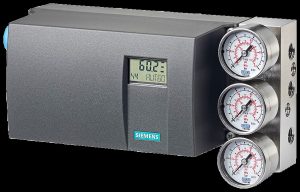
in Iran, is proud to provide this equipment and other industrial instrumentation products with immediate delivery or on a scheduled basis.
To view more products Click here to download the NuovaFima product catalog.

