
Comparison of Diaphragm and Bourdon Tube Mechanisms in Pressure Gauges and Switches
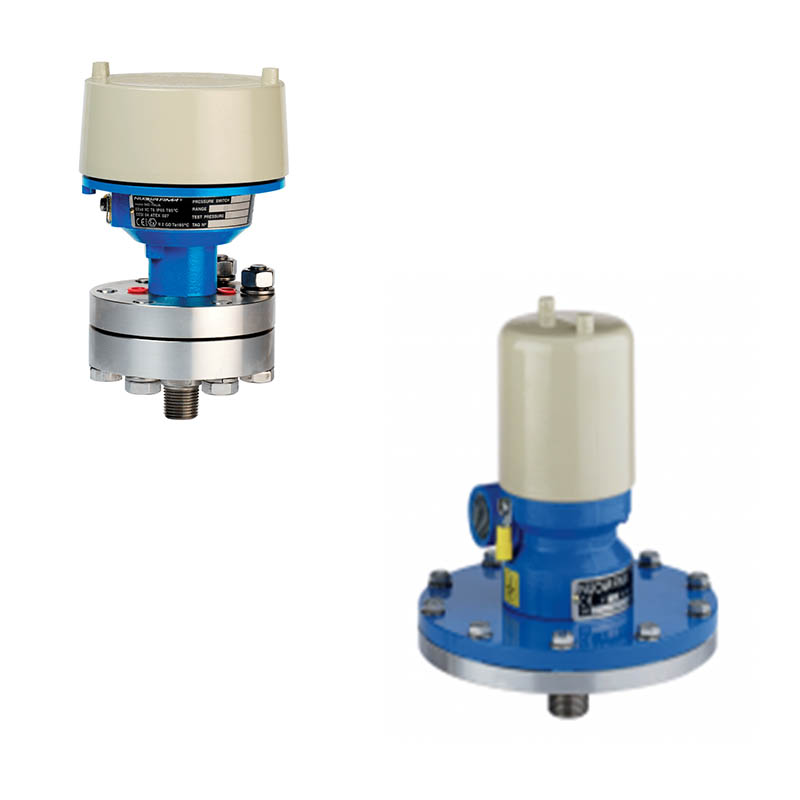
Nouvafima Pressure Switch
October 28, 2018
Nuova Fima NACE Standard
November 11, 2018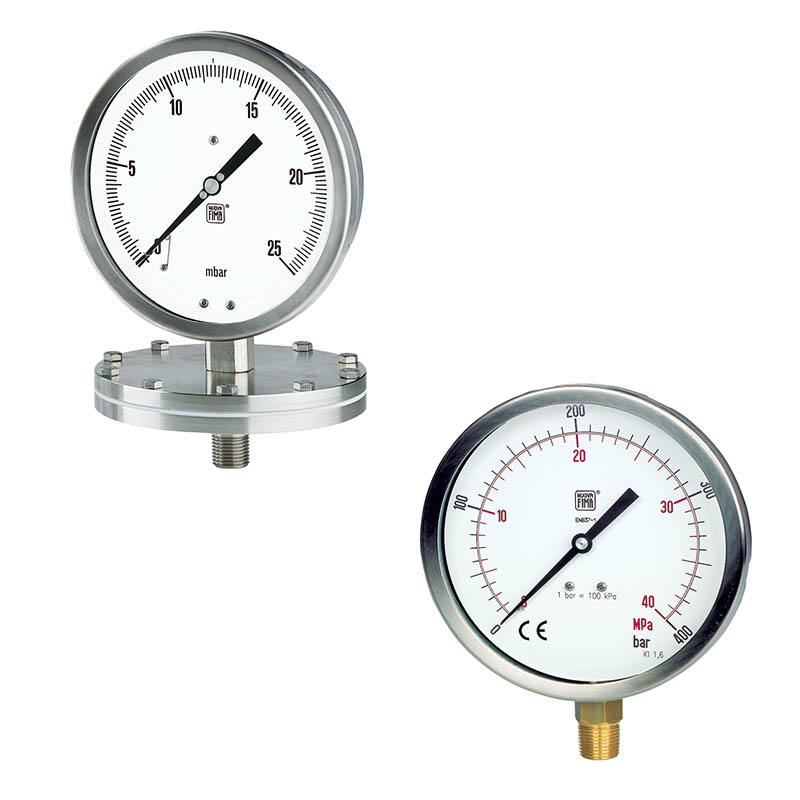
Review and Comparison of MechanismsDiaphragm و Bourdon Tube In Pressure Gauges and Switches
In pressure measurement, the diaphragm and Bourdon tube mechanisms are commonly used. In some cases, bellows and capsule mechanisms are also employed, which function similarly to the diaphragm type.
Bourdon Tube Mechanism
The Bourdon tube is a hollow, oval-shaped metal tube. In its normal state, it is at its maximum curvature, and applied pressure causes it to straighten. In pressure gauges, this deformation is transmitted to the indicator via a gear mechanism, while in pressure switches, it actuates an electrical microswitch.
Advantages of the Mechanism Bourdon Tube :

