
Hysteresis Switching Function with an Electronic Pressure Switch

VEELOK Manifold Valve
April 22, 2018
General Specifications of Instrumentation Equipment
May 20, 2018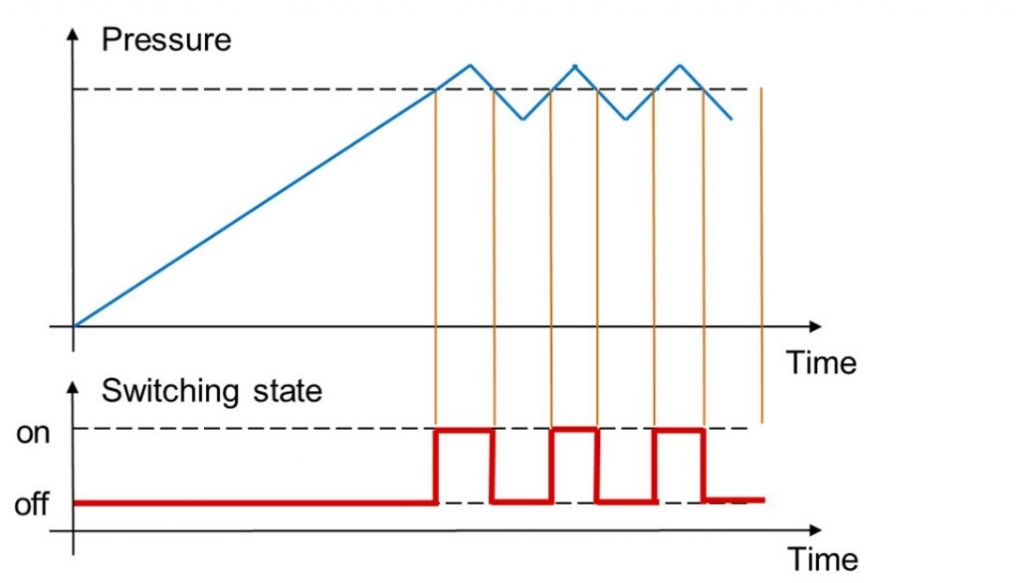
Using Switching Function “hysteresis” What does it mean to use an electronic pressure switch?
The hysteresis switching function applies to all types of switches, whether mechanical or electronic, and can be used for parameters such as pressure, temperature, level, or flow. Hysteresis is generally defined as the difference between the switch point and the reset point. For mechanical switches, hysteresis is usually pre-defined by the manufacturer, whereas for electronic switches, it is often adjustable.
Hysteresis is the most well-known and widely used switching method for switches. For example, a pressure switch may be used to monitor a drinking water pump. The switch output should activate when the line pressure exceeds a specified value, stopping the pump. After the pump stops, the pressure must drop below the set point for the switch output to deactivate, allowing the pump to restart. In a continuous process, without hysteresis, the pump would rapidly turn on and off, causing instability and potentially leading to premature pump failure (see diagram below).
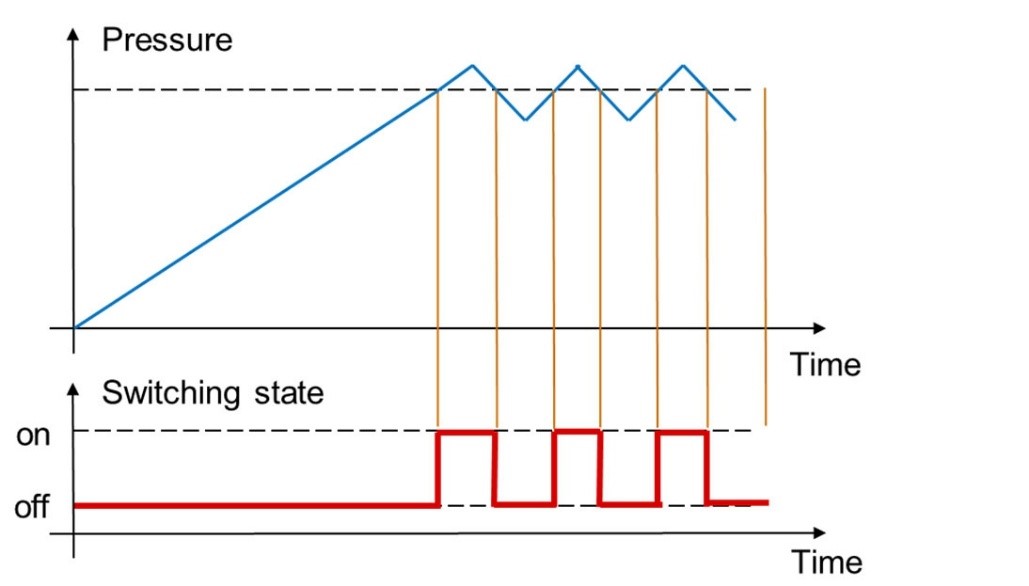
Therefore, to prevent oscillation in the system, it is necessary to set a switch point and a reset point. For example, a defined hysteresis can be used to activate a stable control loop, as shown in the figure below.
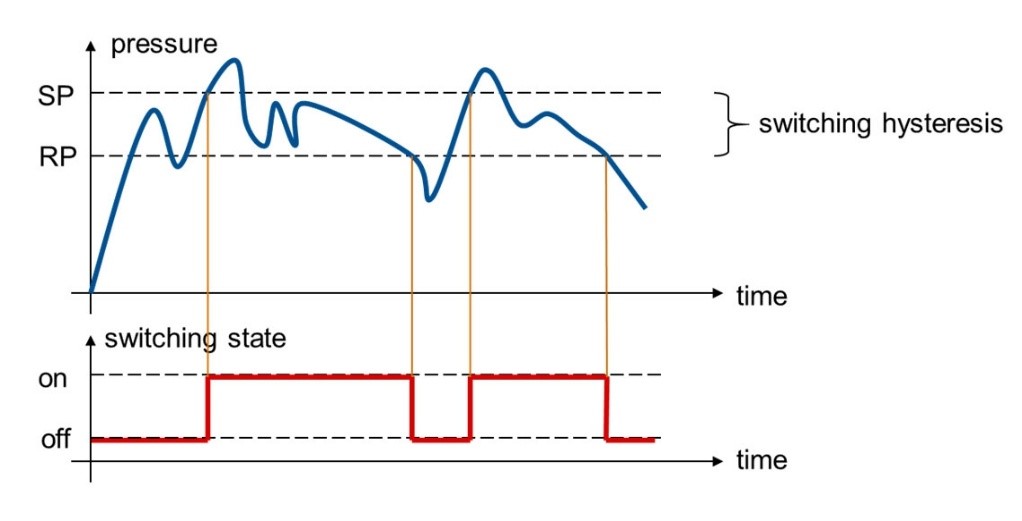
Mechanical switches, due to their design, have a pre-defined hysteresis specified by the manufacturer, typically ranging from 10% to 20% of the switch point. For example, for a switch point of 10 bar, the reset point would be around 9 bar. In electronic switches, hysteresis is usually fully adjustable across almost the entire measurement range, often configured through external software.
Hysteresis is widely used in industrial switching. Due to its ease of implementation in mechanical switches, it is often the only practical switching method available.

