Manifold Valve
January 22, 2019Float Level Transmitter
February 24, 2019
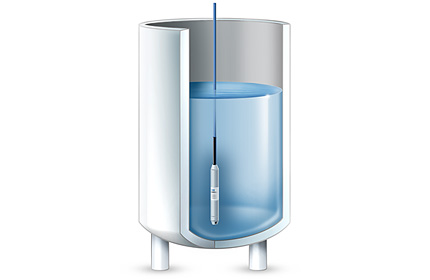
deleteTube و Capillary differential pressure transmitter in tank level measurement using differential pressure mechanism:
Considering the various drawbacks of measuring pressurized tank levels with tubes and capillaries, including:
Significant effect of ambient temperature changes on the oil pressure inside the capillary (expansion of the capillary metal wall and oil pressure drop), causing measurement errors
Problems caused by suppression and elevation due to the oil column pressure inside the capillary, depending on the transmitter installation type, location, and capillary positioning
Possibility of oil stiffening or freezing in outdoor environments during cold seasons, which prevents proper pressure transmission
Operational and maintenance issues (leakage and oil drainage inside the capillary)
When using a tube to transmit gas or vapor pressure onto the liquid surface, condensation may occur along the line, causing blockages
Electronic differential pressure transmitters can be used in this case. Here, the High and Low pressures are each measured by a separate sensor, and after converting the pressure into an electrical signal, these signals are transmitted to the transmitter via wiring. The transmitter then calculates the difference between the two signals to determine the liquid level in the tank. This approach resolves all the aforementioned issues and increases reliability by up to ten times, while also providing much higher measurement accuracy.
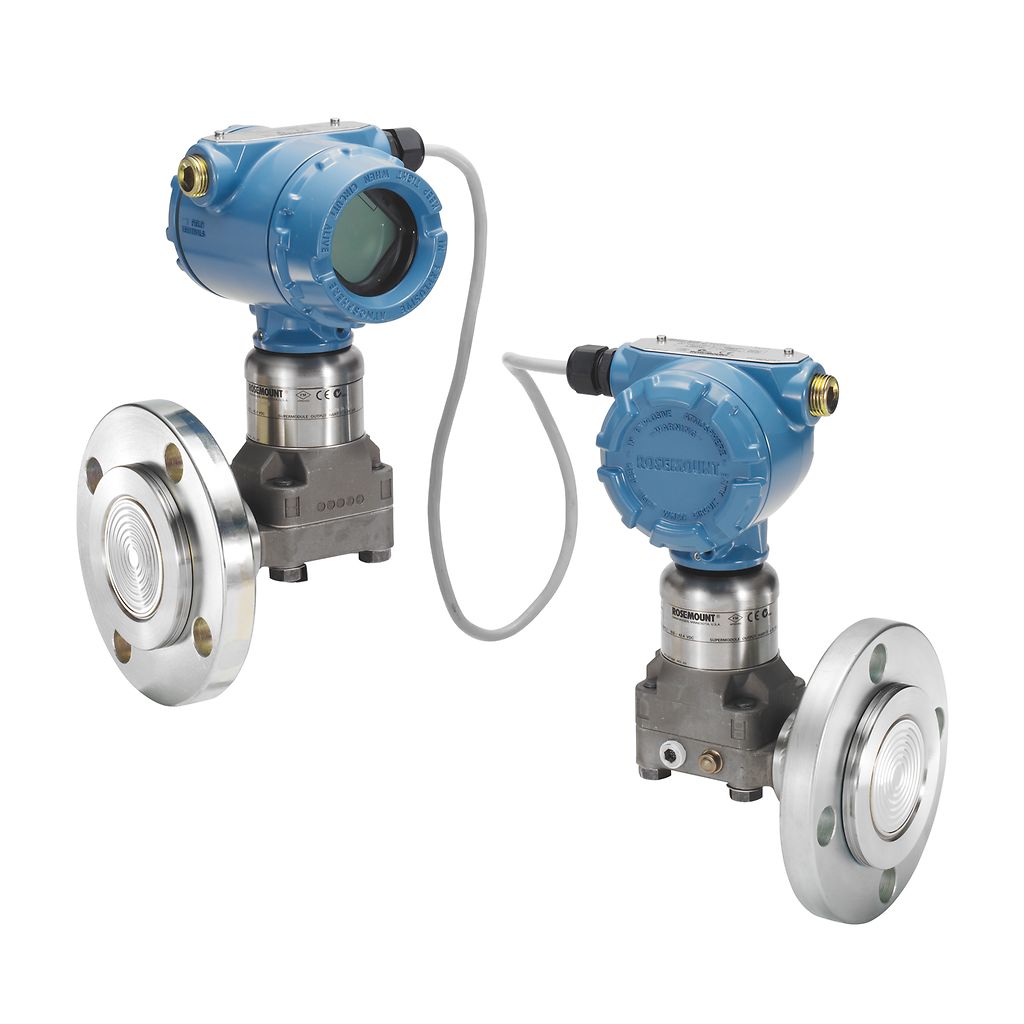
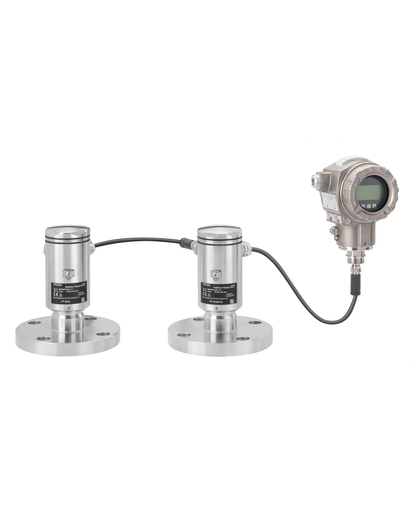
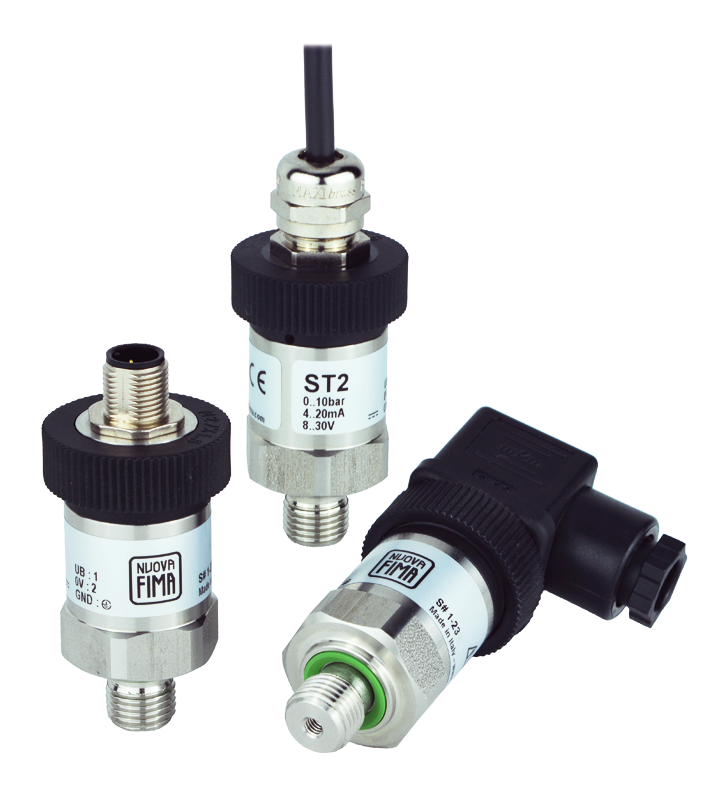
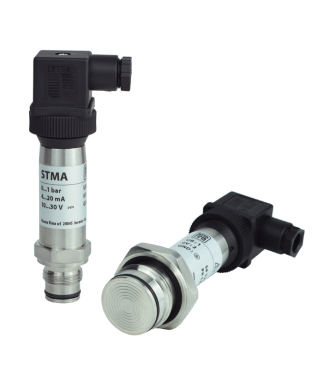
The most economical and efficient option for this type of measurement is to use two pencil-type (Non-Smart) pressure transmitters, with each transmitter's range selected according to the High and Low working pressures being measured.
After installation, their analog current output signals (4-20 mA) are connected to two AI (Analog Input) ports of the control system (e.g., PLC). In the PLC programming, the difference between these two signals is calculated using a function, and the output is an AO (Analog Output) current signal (4-20 mA), which represents the pressure caused by the fluid level and can be used for charting.
This measurement method is highly cost-effective and also provides high accuracy. The accuracy of these transmitters is below 1% (optionally up to 0.25%) and diaphragm-type versions are available for viscous, sticky, and food-grade fluids.