
Temperature Control Method PID:
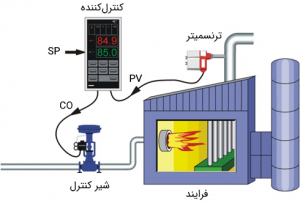
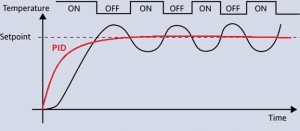
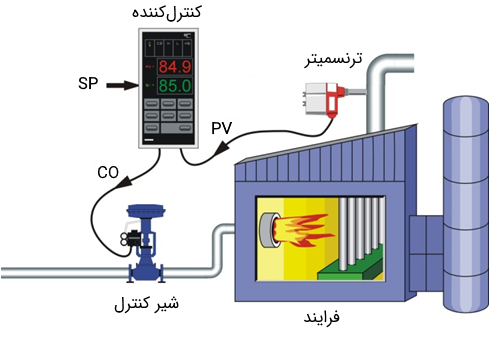
In PID control, however, the conditions are different. Suppose we want to control the temperature of the same furnace using a PID controller. Initially, the burner turns on and the furnace temperature begins to rise. When the temperature reaches 400°C, the gas valve installed before the burner partially closes to 50%, allowing half of the fuel to flow. As the temperature reaches 425°C, the valve closes 75%, permitting only 25% of the fuel to pass. Finally, when the temperature reaches 450°C, the valve closes 90%, allowing 10% of the fuel to pass. In this way, the furnace reaches the desired temperature with minimal overshoot. You might ask, why leave the gas valve 10% open? This amount of fuel, the corresponding flame, and the resulting heat represent the energy required to maintain the furnace at 450°C in steady-state conditions. Naturally, if the temperature drops to 448°C due to process variations, the valve opens 15%, and if it rises to 452°C, the valve opens 5%, adjusting the fuel flow accordingly. If the temperature rises further, the valve moves toward complete closure. This method provides highly accurate temperature control, minimal fluctuations, fast response to process changes, reduced wear, and greater stability. It should be noted that the percentages mentioned above are hypothetical and intended to illustrate the concept. In practice, a PID controller continuously measures the temperature at much shorter intervals and issues appropriate and proportional commands based on real-time process conditions.
Isatis Farayand Abzar Company is ready to undertake temperature control projects in both E.P and E.P.C formats.