
Review and Comparison of Orifice and Venturi Flow Meters
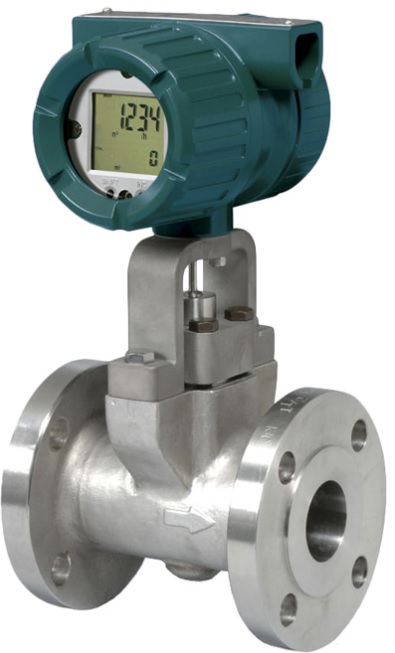
Vortex Flow Meter
June 14, 2020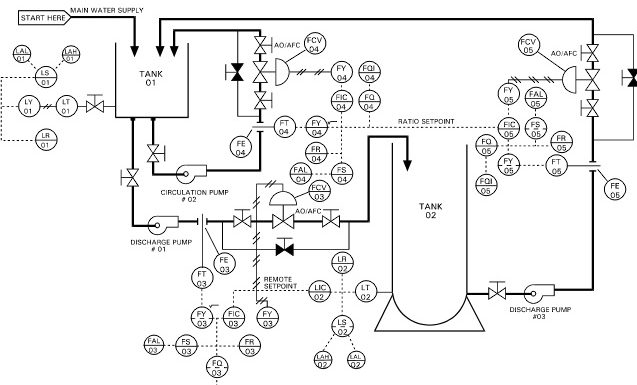
Piping and Instrumentation Diaphragm (P&ID)
August 10, 2020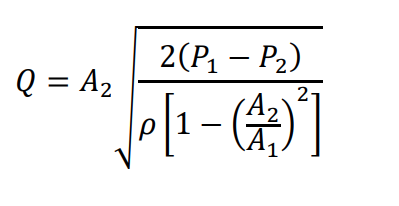
Review and Comparison of Orifice and Venturi Flow Meters
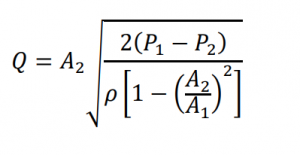
Based on the Bernoulli equation, if a mechanism is placed in the fluid path that creates a pressure difference, this differential pressure (DP) will be proportional to the flow rate. Measuring flow based on differential pressure is one of the most commonly used methods in industry. To create this pressure difference, two mechanisms are typically employed: the Venturi tube and the Orifice plate, which will be reviewed and compared below.
In the Orifice Plate mechanism, the differential pressure is created by placing a perforated metal plate perpendicular to the fluid flow. In the Venturi mechanism, however, the desired pressure difference is generated by reducing the cross-sectional area at a throat. The differential pressure (DP) created is measured by differential pressure transmitters, and by applying appropriate coefficients depending on the process conditions, the resulting flow rate is obtained.
1. The pressure drop created in the downstream section of the Orifice Plate mechanism is much higher than in the Venturi tube, which is one of the main limitations of this design. This pressure difference in high-pressure, continuous, and long-term processes places significant load on the pump and also results in higher electrical power consumption.
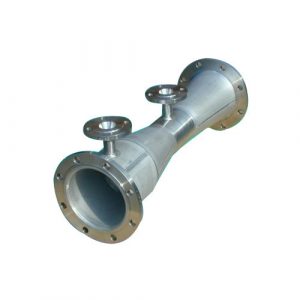
- The construction cost of a Venturi tube is higher than that of an Orifice Plate, and its design and installation are more complex and time-consuming. Additionally, due to changing process conditions, it is possible to modify or replace the Orifice Plate opening, whereas this flexibility does not exist in a Venturi flow meter.
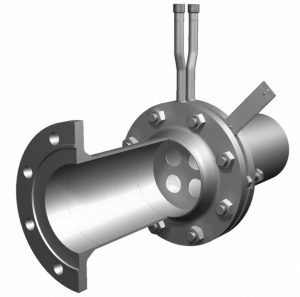
- Installing a Venturi flow meter requires more space and a longer length of piping for installation.
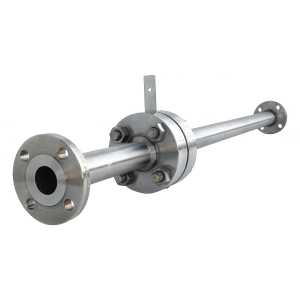
- Venturi meters are typically made of carbon steel, whereas Orifice Plates are manufactured from materials such as stainless steel, Monel, and others.
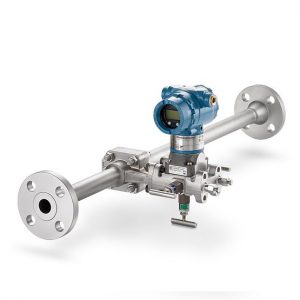
- For dirty fluids containing suspended particles and slurries, the Orifice mechanism cannot be used due to the risk of clogging.

