
What is a Temperature Transmitter?

Temperature Gauge
January 26, 2022
Pressure Transmitter
February 4, 2022What is a Temperature Transmitter?
A temperature transmitter is an electronic device used to send temperature measurements via two wires to a processing unit. The temperature transmitter is responsible for converting the electrical signal from the temperature sensor into a readable signal for the processing unit. In most cases, the signal is sent to a programmable logic controller (PLC) or a receiver.
If you are using thermocouples, resistance temperature detectors (RTDs), or thermal resistances and are unsure how to convert their micro-signals to the industrial standard 4–20 mA, you need to use a temperature transmitter.
Transmitters are physically designed to accept and provide various types of inputs and outputs. They require a power supply voltage and, depending on your application, come in different physical forms.
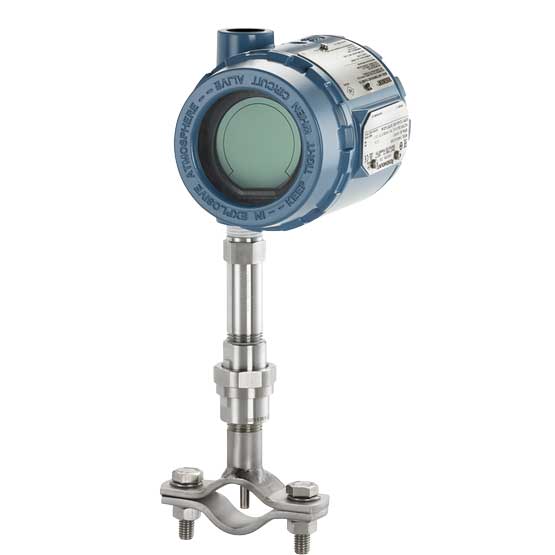
Isatis Farayand Abzar Company is a supplier of various general-purpose industrial temperature transmitters as well as specialized temperature transmitters required by different industries, from reputable European and Asian brands, including Wika, Yokogawa, Endress+Hauser, Rosemount, and more.
How Do Temperature Transmitters Work?
The purpose of transmitters is to amplify and filter the signal from the temperature sensor. The way this is done varies slightly depending on the type of sensor used.
For example, when using an RTD, a Wheatstone bridge is used to generate a small voltage at its terminals. This signal is then amplified to produce a 4–20 mA signal. Sometimes, the analog signal is converted to a digital signal (ADC) to allow additional functions such as calibration and scaling, and is then converted back to an analog signal.
When the temperature is at the low set point, the electronics inside the transmitter draw 4 mA from the power supply, and when the sensor reaches the high set point, it draws 20 mA. For example, if your sensor range is 0–100°C, a 4 mA signal corresponds to 0°C, while 20 mA represents 100°C. Using 4 mA as the low reference makes it much easier to detect system faults. As mentioned, transmitters are designed to handle multiple types of inputs and outputs.
What Are the Inputs of a Temperature Transmitter?
The most common types of inputs for temperature transmitters are thermocouples and RTDs.
Thermocouple
Nowadays in industry, thermocouple transmitters are usually designed for base-metal thermocouples, such as types K, T, J, and E. This does not mean that you cannot find transmitters for other types of thermocouples, but they may be more expensive.
Thermocouples have two wires, so transmitters have two input terminals where the wires can be connected.
Resistance Temperature Detector (RTD) Input
RTD inputs are designed based on their resistance values. The resistance is determined by the material used when creating the coil. Platinum is the most commonly used material and has a temperature coefficient of 0.00392 //°C. This allows for a wide range of resistance values. They can vary from 10 to 10,000 Ω, but the most common type is 100 Ω, known as PT100.
The next step is deciding on the number of wires for the RTD. RTDs are available in three wiring configurations: 2-wire, 3-wire, and 4-wire. Each topology requires slightly different circuitry. The 3-wire configuration is the most cost-effective and provides sufficient accuracy. However, transmitters are available for all wiring types.
What Is the Output of a Temperature Transmitter?
The purpose of temperature transmitters is to amplify and filter the signal from the temperature sensor. The way this is done varies slightly depending on the type of sensor used. Many brands manufacture temperature transmitters, including Rosemount, Yokogawa, Endress+Hauser, Wika, and more, all of which are also available in stock at Isatis Farayand Abzar Company.
Temperature transmitters are available in various shapes and sizes depending on the application and the environment in which they are expected to operate. Some examples include:

DIN rail mounted temperature transmitters
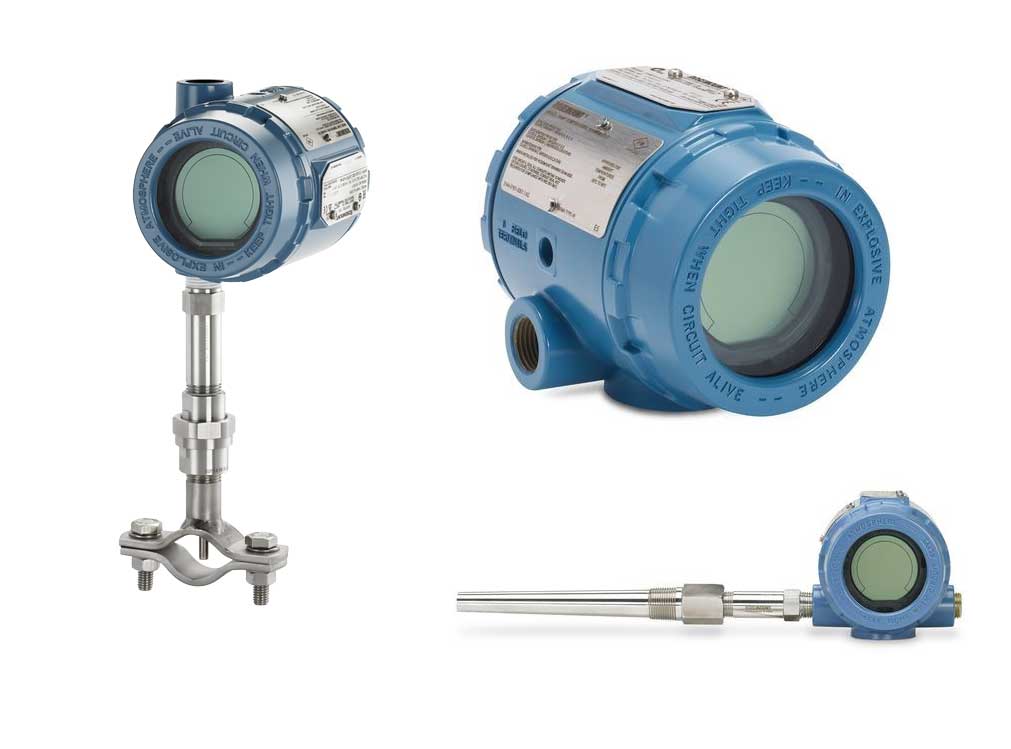
Field mounted temperature transmitters
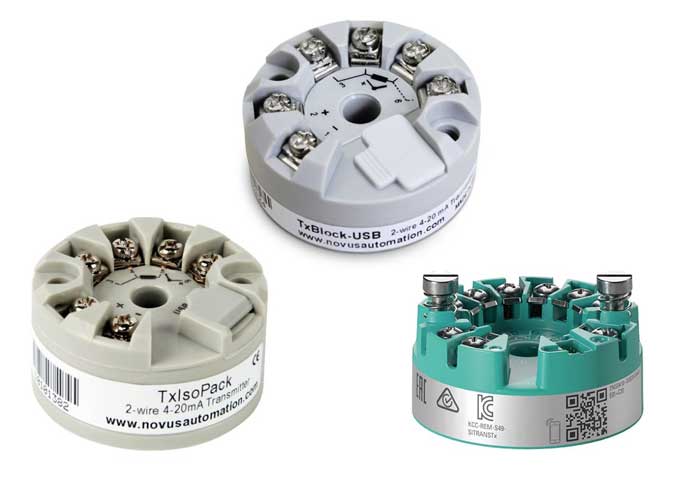
Hockey puck style temperature transmitters
Temperature Transmitter Repair
It should be noted that a temperature transmitter is a very sensitive temperature measuring device. Therefore, if you lack the necessary skills and experience, it is recommended to consult a qualified expert for repair. For further advice and guidance on temperature transmitter repair, you can contact the experts at Isatis Farayand Abzar Company.
Temperature Transmitter Brands
Isatis Farayand Abzar Company is a supplier of various temperature transmitters from brands such as Rosemount, Yokogawa, Endress+Hauser, and ABB.




The engineering team at Isatis Farayand Abzar Company is capable of providing consulting services to help select the most suitable temperature transmitter model based on operating conditions, environment, and fluid type, as well as to find equivalents for older or sanctioned brands and models for valued customers.
To contact the experts at Isatis Farayand Abzar Company for consultation, supply, or finding equivalents for older brands, You can send an email to: info@isatis-fa.com or call by phone at 88480795 021 or send a fax to 88480798 021 Share your request with the company’s specialists.

