
How can the flow rate of multiphase fluids be measured using an ultrasonic flow meter?
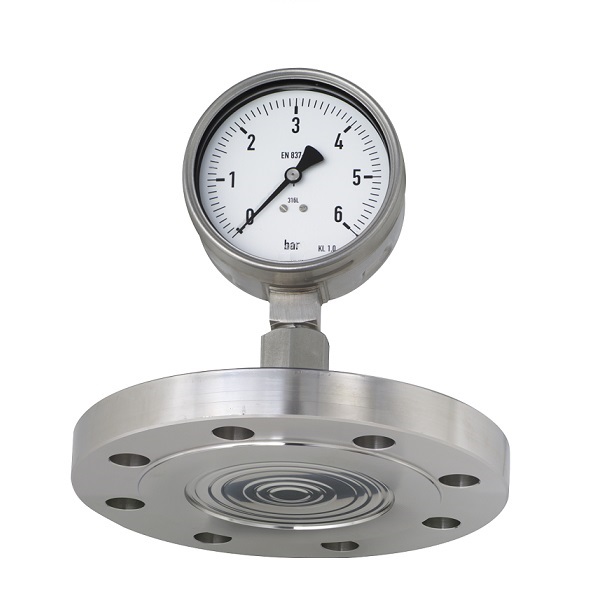
Couple gauge and diaphragm seal suitable for a temperature of -20°C
September 16, 2018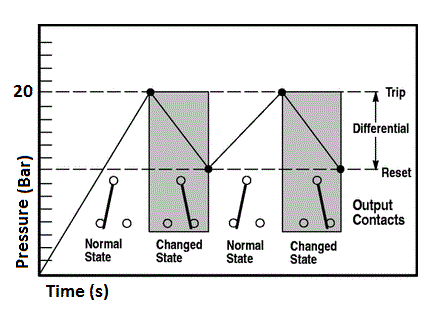
Pressure Switch Operation
September 30, 2018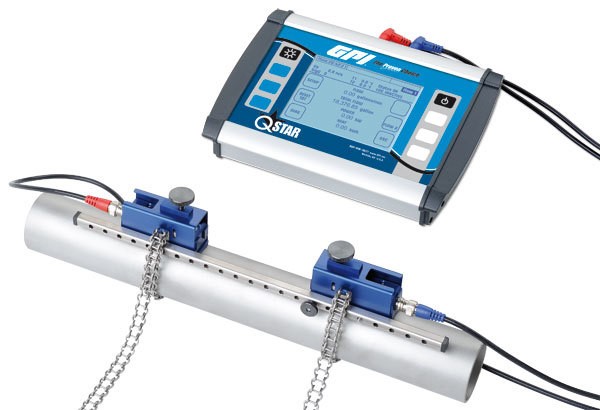
Review and comparison of different mechanisms of ultrasonic flow metersTransient time – Doppler effect)
The use of ultrasonic waves as a non-contact mechanism for measuring physical quantities (level and flow) is common in the industry.
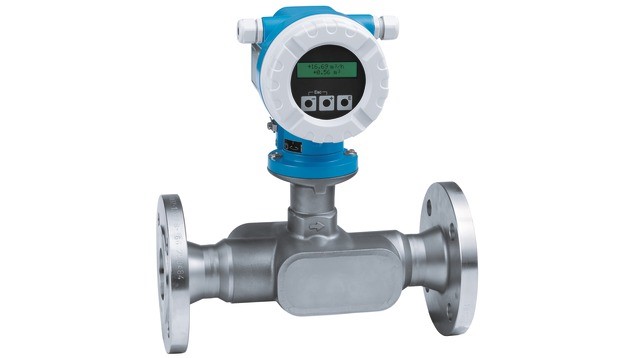
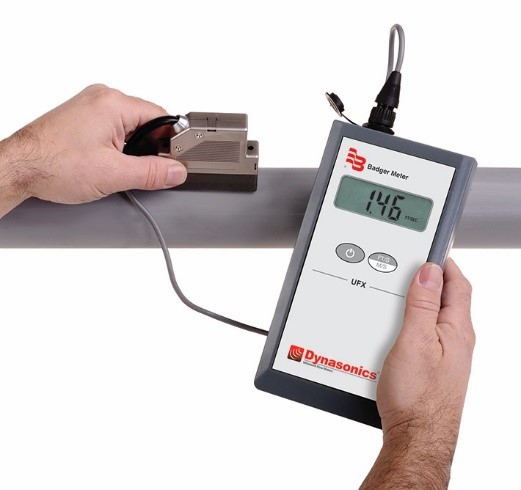
Ultrasonic flow meters are used in two forms, in-line and clamp-on, depending on the specific conditions.
Ultrasonic flow meters use ultrasonic waves (frequency over 20 kHz) to measure fluid flow, and generally operate based on two mechanisms.
Transit-time ultrasonic flow meters (Transient time)
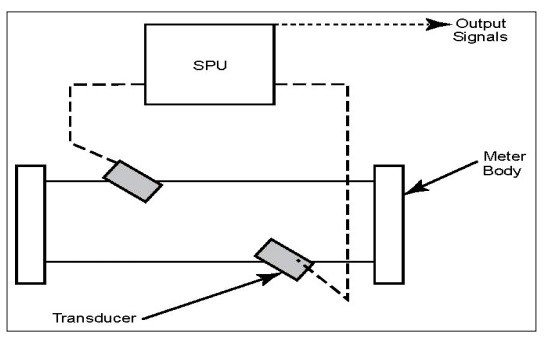
In a transit-time ultrasonic flow meter, two transducers—one installed at the bottom of the pipe (Transducer A) and the other at the top (Transducer B)—simultaneously transmit an ultrasonic wave.
The transducers are installed at positions and angles such that the ultrasonic wave from A to B travels in the same direction as the fluid flow, while the wave from B to A travels against the flow.
The transit time of the ultrasonic wave is measured by the flow meter’s signal processing unit (SPU).
In this case, the transit time of the ultrasonic wave from Transducer A to B is naturally shorter than that from B to A (due to propagation along and against the fluid flow), and the higher the fluid velocity, the greater this time difference.
If we denote the transit time of the ultrasonic wave from A to B as TAB and from B to A as TBA the difference between these two times can be converted to fluid velocity by applying a coefficient. Knowing the pipe cross-sectional area, the volumetric flow rate can then be calculated.
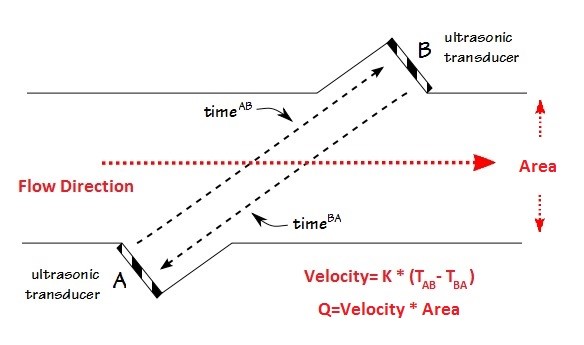
The coefficient K, which converts the difference in transit times to the corresponding flow rate, varies depending on the pipe material, its thickness, the presence of internal or external coating, the distance between the transducers, and other factors, and must be considered during the flow meter calibration stage.
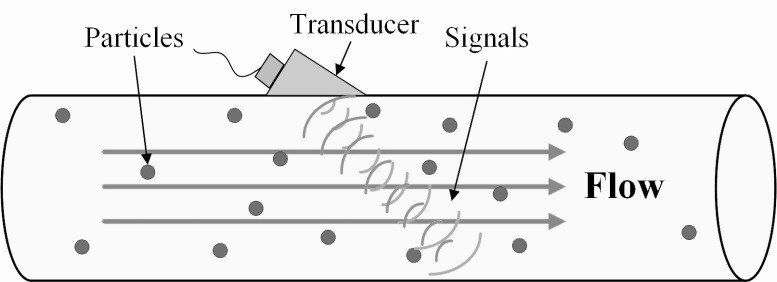
The use of transit-time ultrasonic flow meters is not recommended for fluids that are not homogeneous and contain suspended particles; in such cases, Doppler-type flow meters should be used.
Doppler ultrasonic flow meters (Doppler Effect)
Since, according to the Doppler effect, the frequency of an ultrasonic wave changes when it reflects off a moving object, this property is used to measure the flow rate of fluid in a pipeline.
The working principle of Doppler flow meters is such that an ultrasonic wave with a frequency of 500 kHz is transmitted from Transducer A to B and measured at the end point (point B).
The difference between the transmitted and received ultrasonic frequencies, or the frequency shift as the wave passes through the fluid, varies depending on the fluid velocity and is converted to the corresponding flow rate using a coefficient.
In clamp-on Doppler ultrasonic flow meters, both transducers A and B can be installed on a single clamp, and the frequency shift is calculated after the wave reflects off the pipe wall.
The main advantage of the Doppler type compared to transit-time is its ability to be used for contaminated fluids, wastewater, and fluids containing suspended particles.
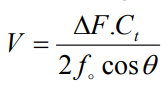
ΔF: Frequency shift caused by the fluid flow
Ct Sound velocity in that fluid
F0 Initial frequency of the transmitted ultrasonic wave
Θ: Angle between the ultrasonic wave direction and the horizontal plane
Advantages of ultrasonic flow meters (Transit-time & Doppler)
Since there are no components in the fluid path, no pressure drop occurs at the flow meter installation point.
Measurement capability in both in-line and portable configurations
High accuracy of up to 0.2% of the measured flow
Non-contact (suitable for food-grade and corrosive fluids)
Measurement independent of fluid temperature, pressure, density, and viscosity
Low maintenance cost due to the absence of moving parts in the mechanism
Disadvantages of ultrasonic flow meters (Transit-time & Doppler)
Environmental acoustic noise can cause errors (should not be installed near control valves or pumps).
They cannot be used at very high temperatures (above 200°C).
Relatively high cost
Since for measuring the flow of fluids such as:
For fluids such as wastewater, slurries (cement, sand, gravel, etc.), sludge, particle-laden chemical liquids, food liquids containing fine particles, and all heterogeneous or multiphase fluids, it is not possible to use turbine, vortex, positive displacement, orifice plate flow meters (due to the presence of mechanisms in the flow path and the risk of clogging) or mass flow meters (due to very high cost and size limitations). In such cases, only magnetic flow meters and Doppler-type ultrasonic flow meters can be used.
It is important to note that if the fluid does not have a minimum conductivity of 5 µS/cm, magnetic flow meters cannot be used, and the optimal choice will be a Doppler-type ultrasonic flow meter.

