
Instrumentation Valve

Fieldbus Protocol
December 10, 2018
Ball Valve
December 30, 2018
Review of Different Types of Instrumentation Valves and Their Applications
Industrial valves are generally used for three main purposes.
Starting and stopping the fluid flow
Regulating and controlling the fluid flow
Ensuring unidirectional fluid flow
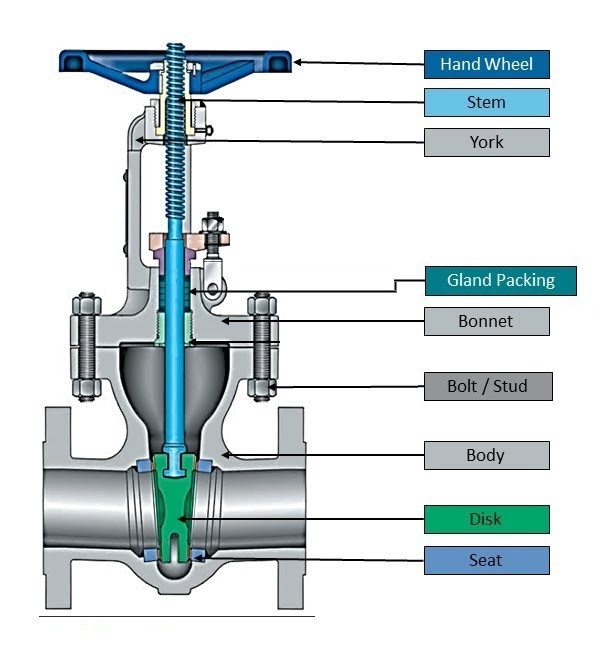
First, to better understand the concepts, we will examine the main components of a valve.
Body : is the main part of the valve, sometimes referred to as the casing. It is installed in series within the pipeline, and its primary function is to withstand the pressure of the fluid. It also serves as the framework on which the other valve components are mounted.
Disk/Plug :The flow rate adjustment or on/off operation of the fluid is achieved by moving the disk along an axis perpendicular to the fluid flow direction.
Seat : The seat is where the disk rests or acts as the interface between the body and the disk. It is often made of soft and flexible material to provide sealing. Metal seats must be perfectly smooth and polished to ensure a tight seal when the valve is fully closed.
Bonnet :This part is attached to the valve body via a flange or welding and is responsible for housing the stem and the valve packing.
Stem : The stem is responsible for transmitting force from the actuator (manual, pneumatic, electric motor, hydraulic, or solenoid) to the disk.
Gland Packing :A sealing system installed inside the valve body that prevents process fluid from leaking along the sides of the valve stem.
ولو ابزاردقیق، شیر های صنعتی،instrument valve ،شیر ابزار دقیق

