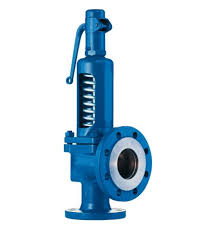
Safety Valve
May 29, 2017Fieldbus and HART
June 18, 2017
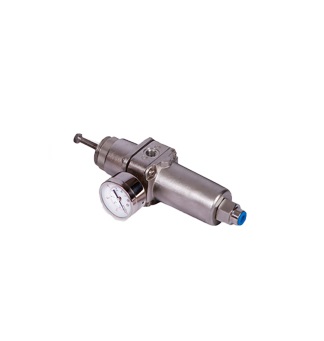
Air Filter-Regulators
Air filter-regulators are available in various sizes and models, which include the following:
1. Regulator filter sizes: 3″, 2″, 1″, 3/4″, 1/2″, 3/8″, 1/4″, and 1/8″.
Moisture (water) removal, available in manual drain, semi-automatic drain, and fully automatic drain models.
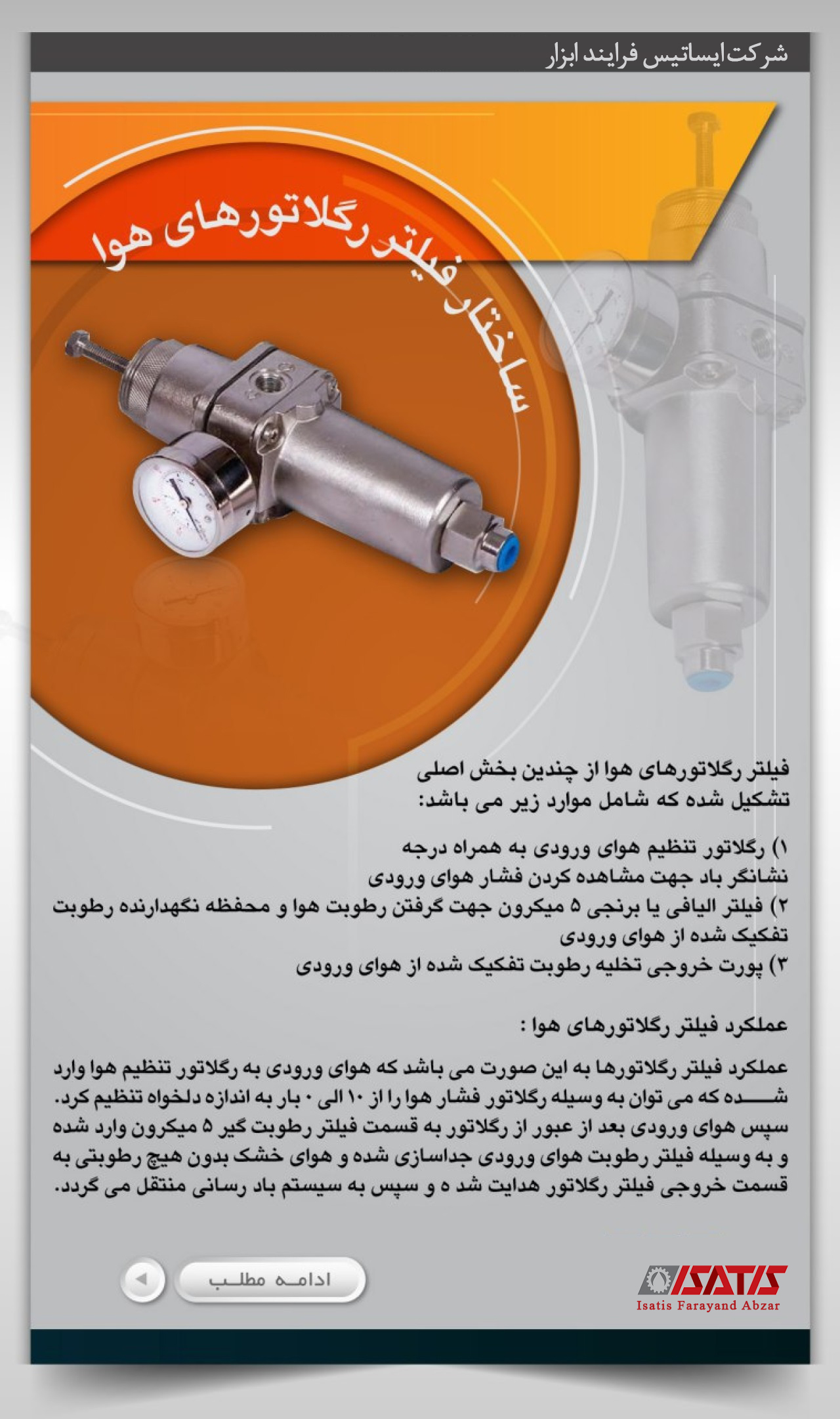
Structure of Air Filter-Regulators:
Air regulator filters are composed of several main components, including the following:
1. Regulator for adjusting the inlet air, equipped with a pressure gauge to monitor the input air pressure.
2. 5-micron fiber or brass filter for removing moisture from the air, with a separate moisture collection chamber isolated from the incoming air.
3. Moisture drain outlet port, separated from the incoming air. Operation of air regulator filters:
The operation of regulator filters is as follows: incoming air enters the air pressure regulator, where the air pressure can be adjusted to the desired level from 0 to 10 bar.
Then, the incoming air passes through the regulator into the 5-micron moisture filter. The filter removes moisture from the air, directing dry, moisture-free air to the filter’s outlet, from where it is delivered to the compressed air system.
Standard Operating Conditions for Air Filter-Regulators
Regulator filters can operate at temperatures from -5°C to +40°C and with air pressure ranging from 0 to 10 bar. Please note that if the incoming air contains oil or grease, the moisture filter will become coated and will not be able to remove moisture effectively.
Applications of Regulator Filters:
The main reason for using regulator filters in compressed air systems is to remove moisture from the air. If the supply air contains moisture, it can cause serious and irreversible problems. Some of these issues include:
1. Corrosion and deterioration of all O-rings and packings in cylinders and pneumatic control valves, as well as oxidation, rusting, and damage to the body of cylinders and pneumatic control valves.
In the paint industry, issues such as water cavities, surface unevenness, and many other problems can be mentioned. In the machinery, food, pharmaceutical, hygiene, construction, industrial, petrochemical, and other sectors, similar challenges are also observed.