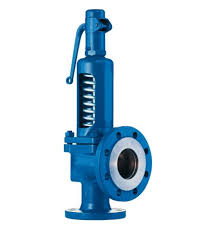
Threaded Connection Safety Valves
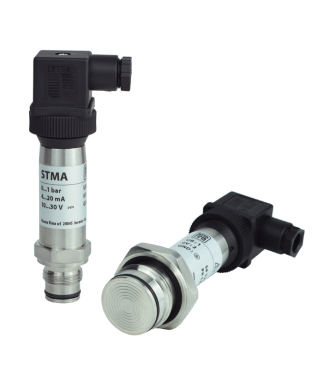
June 10, 2018NuovaFima Transmitter
July 1, 2018
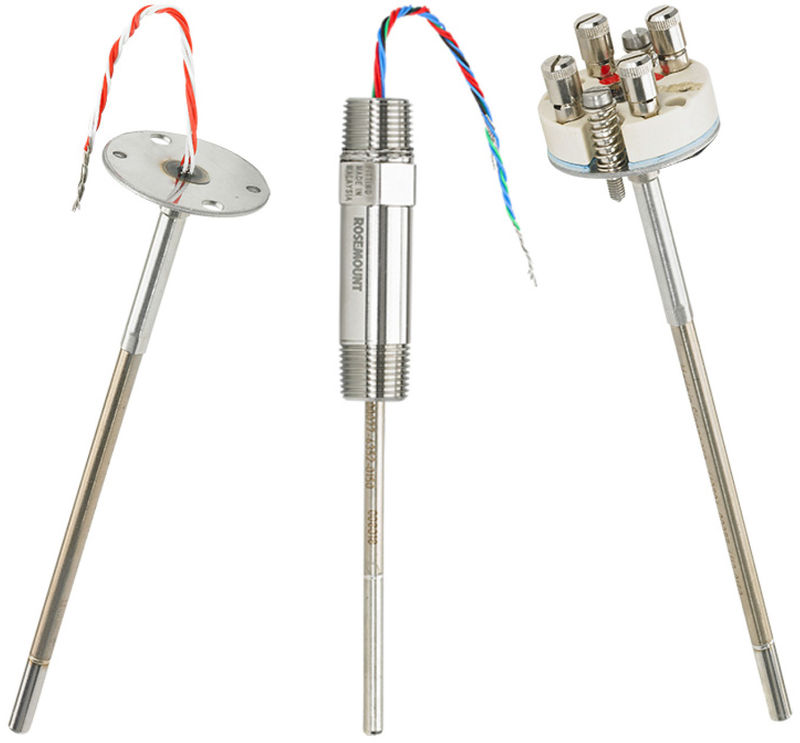
RTD Temperature Sensors
Resistance Temperature Detectors, or RTDs, consist of a thin metal wire wound around a ceramic core. The metal’s resistance changes predictably with temperature, allowing accurate measurement of the temperature. RTDs are one of the most commonly used methods for temperature measurement in industrial applications.
RTDها از فلزهای خالصی ساخته می شوند، مانند پلاتین Platinum ، نیکل Nickel ، مس Copper
These metals have a precise relationship between resistance and temperature. Sir William Siemens recommended the use of platinum, which is an ideal metal with a stable resistance-to-temperature (R-T) relationship at high temperatures. Nickel has a more limited temperature range, becoming nonlinear above 300 °C. Copper also has a very good linear relationship; however, it oxidizes at moderate temperatures (above 150 °C). Therefore, platinum is the best choice for RTDs.
The unique properties of platinum make it the preferred sensor material for temperature ranges from -250 °C to 900 °C. Another reason for choosing platinum is its chemical inertness, making it resistant to chemical effects.
RTD sensors are available in two-, three-, and four-wire configurations. Two-wire RTDs are prone to higher errors due to lead resistance. Three-wire RTDs reduce this error, while four-wire RTDs completely eliminate the effect of lead resistance.
Linear and stable output
High accuracy
Relatively wide measurement range (-250 °C to 900 °C)
Minimal influence from nearby magnetic fields
Higher cost compared to thermocouples
Sensitive to vibration and shock (requires special construction)
Relatively slow response time
Essential Points for Ordering an RTD:
-
Sensor length
Sensor diameter
Sensor sheath material (usually S.S.316)
Requirement for a transmitter (for 4–20 mA signal generation and transmission)
Size and type of threaded connection
Cable length if a local (head-mounted) transmitter is not needed